NAIR LABORATORY
Department of Applied Science | William & Mary
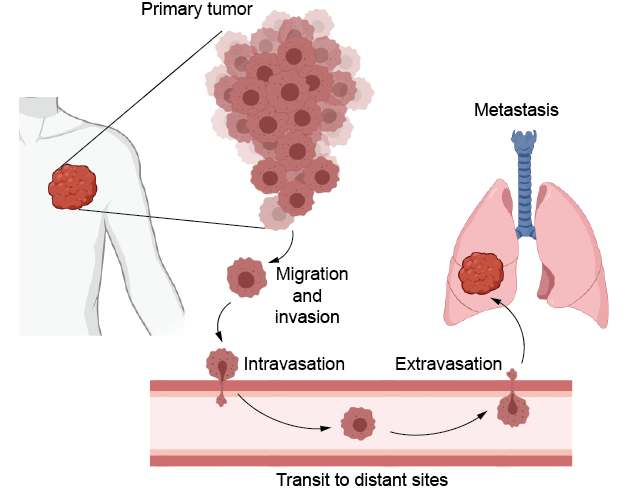
Cancer metastasis - the spread of cancer cells from the primary tumor to distant organs - causes the vast majority of cancer-related deaths. Thus, developing effective therapies that limit or prevent metastatic spread is critical to improving patient survival. We study how epigenetic factors (which regulate gene activity without changing the DNA sequence) and biophysical factors (such as the stiffness of the environment surrounding cells) affect how cancer cells move and behave.
We work at the interface of bioengineering, cancer biology, and pre-clinical animal models. By understanding what controls cancer cell movement, we hope to develop new treatments that can slow or stop cancer from spreading to other parts of the body.
Research
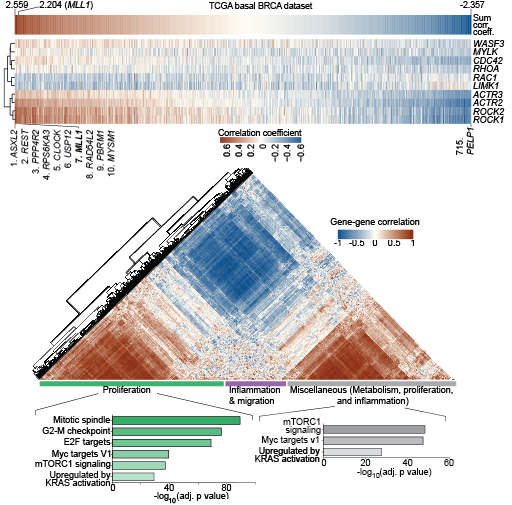
Bioinformatic Discovery of Metastatic Drivers
Large-scale cancer datasets provide a powerful resource for discovering genes that enable cancer to spread. We use bioinformatics to identify promising candidates and experimentally validate their roles in cancer progression.
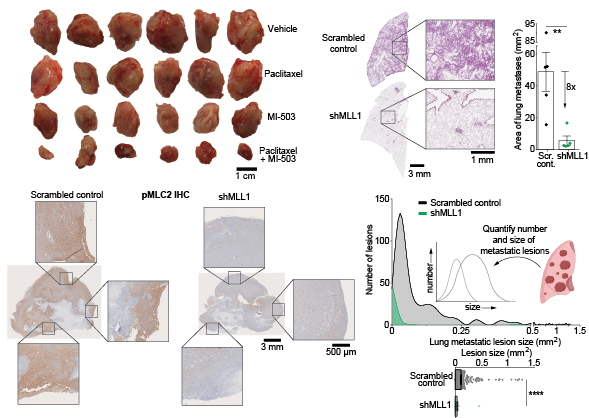
Epigenetics & Cancer Progression
Epigenetic factors regulate gene activity and can profoundly influence how cancer cells grow, move, and spread. We investigate how these regulators control cell migration and metastasis to identify new mechanisms and therapeutic vulnerabilities.
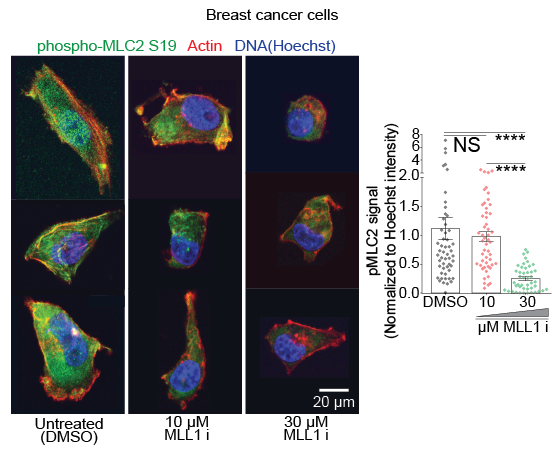
Biophysics & Epigenetics
Cancer cells experience physical forces as they interact with their surrounding environment. We study how these biophysical cues influence epigenetic regulation, cell behavior, and metastatic progression.
Join the Lab
If you are interested in our work and are considering joining us, please reach out to Prof. Praful Nair.